
Description
S3 safety rating
This is a full industrial protection standard under EN ISO 20345.
It means the boot includes:
- Steel/fibreglass toe protection (200J impact resistance)
- Puncture-resistant midsole
- Anti-static protection
- Energy-absorbing heel
- Oil/fuel-resistant outsole
- Water-resistant upper
SRC slip resistance
Highest slip-resistance rating used in safety footwear testing.
Tested on:
- Wet ceramic tile + detergent
- Steel surface + oil/glycerol
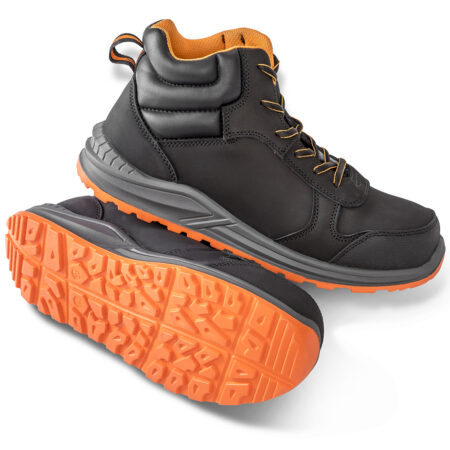
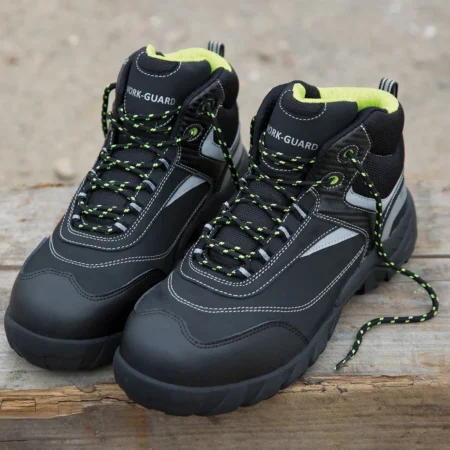
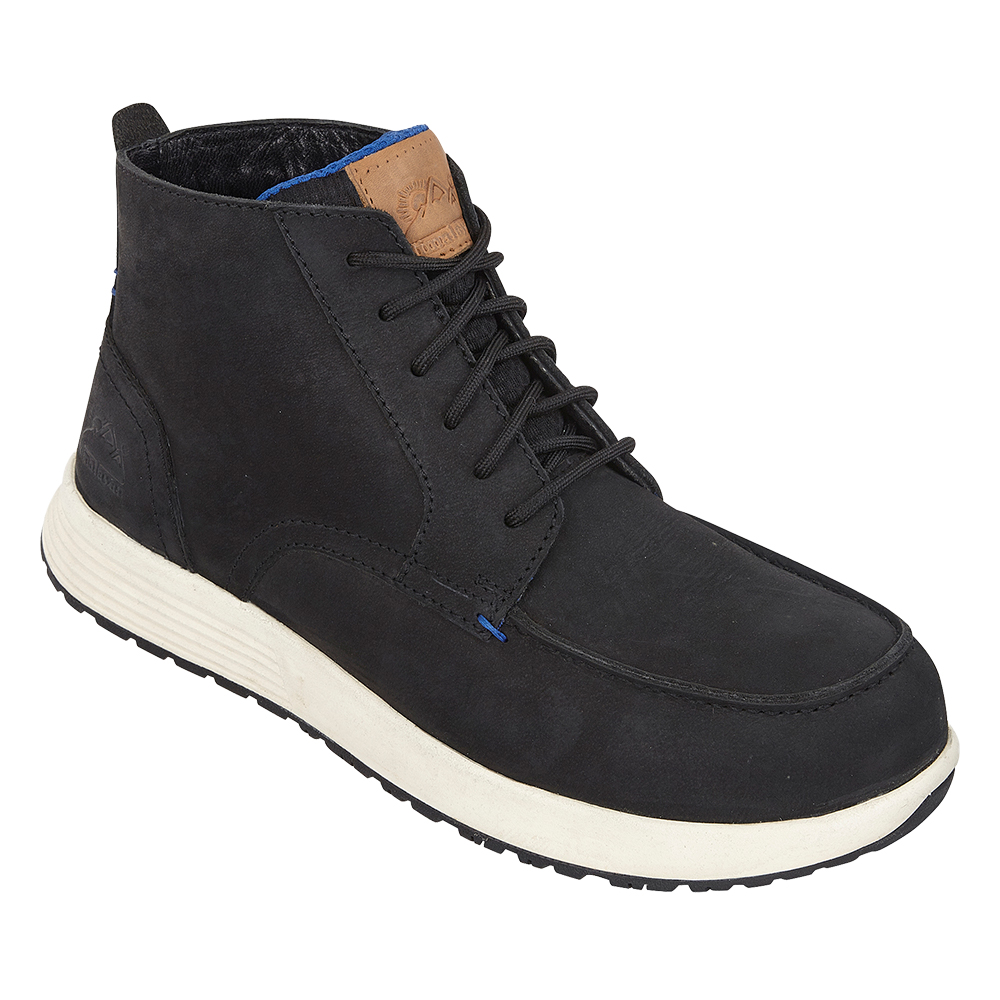
Water-repellent waxy black nubuck upper
Nubuck is a soft brushed leather with a suede-like finish, treated to repel water.
👉 Meaning:
- Stops light rain and splashes
- More flexible and comfortable than hard leather
- More breathable than waterproof membranes
- Can mark/scuff more easily than smooth leather
Moisture Wick AirTex lining
A breathable inner lining designed to manage sweat.
👉 Benefits:
- Draws moisture away from the foot
- Improves airflow
- Helps reduce overheating during long shifts
- Reduces odour and dampness build-up
Anti-static
Prevents static electricity from building up in the body.
👉 Useful in:
- Warehouses
- Fuel or chemical environments
- Electronics handling areas
It reduces the risk of sparks from static discharge.
300°C rubber / Phylon outsole
This is a dual-layer performance sole:
- Rubber outer layer → grip, durability, heat resistance
- Phylon mid-layer → cushioning and shock absorption
👉 In real use:
- Can handle brief contact with hot surfaces up to ~300°C
- Feels softer and more athletic underfoot than traditional boots
Anti-fatigue, ultra-lightweight design
This refers to the overall construction of the boot.
👉 What it means in practice:
- Reduced weight (~560g per boot in this model)
- Less strain on legs and lower back
- Designed for people standing/walking all day
- More like a trainer than a traditional heavy work boot
Overall summary
This boot is built for:
- Long shifts on hard floors
- Warehouse and logistics work
- Light-to-medium construction environments
- People who prioritise comfort and low weight over heavy-duty ruggedness
It is less suited for:
- Deep mud or extreme outdoor conditions
- Heavy demolition work
- Constant exposure to water or harsh site abuse