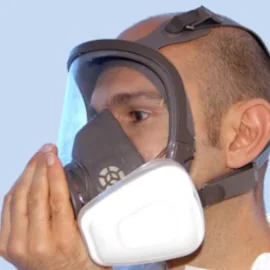
Face Fit Testing and Respiratory Fit by 3M
Focus on Fit
Face Fit Testing and Respiratory Fit
In the UK the Approved Codes of Practices (ACOPs) supporting the Control of Substances Hazardous to Health Regulations (COSHH), the Control of Asbestos at Work Regulations (CAW) and the Control of Lead at Work Regulations (CLAW) require that wearers of tight fitting respirators are fit tested. Fit testing is a means of checking that a respirator facepiece matches a person’s facial features and seals adequately to their face. There are several methods available and the Health and Safety Executive’s information document INDG 479 provides information on how the HSE expect fit testing to be conducted.
-
 How 3M can help with Fit Testing?
3M offers a range of fit testing services including on site fit testing and fit testing training.
-

Learn more about the difference between qualitative and quantitative fit testing protocols.
-
 The Importance of Respirator Fit
Find information to help users perform their everyday seal check test.
Fit Testing Posters and Videos
-

Discover the differences between Fit Tests and Seal Checks, including when to perform each.
Why it’s Important to Focus on Fit
Does Respirator Fit Matter?
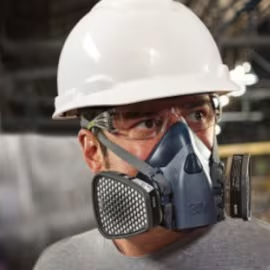
At 3M, we think that the answer to that question is “Yes”. In a workplace environment, if a worker’s respirator doesn’t seal properly on the wearers face, there’s no certainty that it is providing the expected level of protection. A good fit means the respirator (also known as a face mask) will seal against your skin. A “tight fitting” respirator, such as a filtering facepiece respirator/disposable respirator, or a reusable respirator such as a half mask of full face mask can only work when air passes through the filter. Air will take the path of least resistance, so if the seal to the face isn’t there, the air will leak around, rather than go through the respirator, and therefore lessen the protection. One of the common issues with good respirator fit is facial air.
What is the problem with facial hair?
-

Close fitting respirators need to seal tightly to the face. Gaps in this face seal let the dirty air leak inside the respirator. Respirator filters cannot clean the air leaking through the face seal.
It is known that the growth of stubble and facial hair can give significant leak paths for contaminants. For further information on this topic please see the HSE’s research report: RR1052 The effect of wearer stubble on the protection given by Filtering Facepieces Class 3 (FFP3) and Half Masks.Face seal leakage reduces the wearer’s protection.
What are the face fit requirements in the United Kingdom?
Fit testing is a means of checking that a respirator facepiece matches a person’s facial features and seals adequately to their face. There are several methods available and the Health and Safety Executive’s information document INDG 479 provides information on how the HSE expect fit testing to be conducted.
The performance of tight fitting respirators relies on achieving a good seal between the facepiece of the respirator and the wearer’s face. If the seal is inadequate, contaminated air will take the path of least resistance and will travel through leaks in the face seal. Consequently, a poor seal to the face will reduce the level of protection provided to the wearer. Fit testing should be carried out by a competent person. One way of demonstrating competence is to be become Fit2Fit accredited.

What is face fit testing
Seal Check vs Fit Test
A good fit means the respirator will seal to your facial features. A respirator can only work when air passes through the filter. Air will take the path of least resistance, so if the seal isn’t there, the air will go around rather than through the respirator – and therefore the reduce the protection provided.
-
 Fit Testing
Fit testing is required for employees wearing tight-fighting respirators, such as disposable or reusable respirators. This procedure helps ensure the user has selected the correct size respirator and that a seal against the face can be made in order to provide the expected protection.
-
 User seal check: An essential everyday test
A user seal check ensures the tight-fitting respirator is being worn right each time the user puts on the respirator.
Users can either perform a positive-pressure or negative-pressure seal check as described in the product User Instructions. -

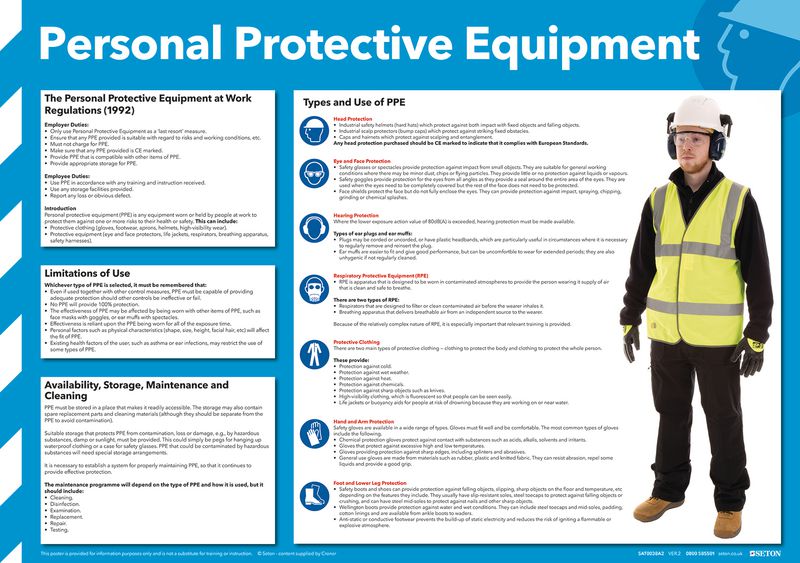
Safety glasses, hearing protection, face shields, hard hats and coveralls can all vie with a respirator for real estate on a person’s face, head or body, potentially interfering with the respirator seal.
To catch these problems before they happen any PPE that could interfere with the respirator’s seal should be worn during the fit test.
Fit Test Equipment
View our online catalog of products to help you run a successful fit testing program.
-

Find convenient fit testing kits containing all you need to perform Qualitative Fit Testing.
-

-

Find disposable and resusable respirators, and test adaptors.

Online Safety Training Courses
Update your knowledge and get all the latest facts, practical tips and more from 3M’s industry leading expert speakers. Access expert industry knowledge through our webinars (Live/On-demand)
Fit Q&A & Resources
Q&A
- What fit test regulations, standards exist around the world?
- What is the problem with having facial hair, if I wear a tight fighting respirator?
- Can Filtering Facepiece Respirators be fit tested using the CNP (Controlled Negative Pressure) methodology?
- Which Fit test adapter do I need to fit test my 3M Reusable Respirator using the quantitative method?
- How do I fit test 3M™ Maintenance Free Half Mask 4000+ series?
Resources
3M™ Qualitative Fit Testing
3M™ Quantitative Fit Testing
3M™ Aura™ 9300+Gen3 Particulate Respirators – Fitting
3M™ Aura™ 9300+ Series Particulate Respirators – Fitting
3M™ Particulate Respirators 8000 & 9000 Series – Fitting
3M™ Aura™ 9400+ Series Particulate Respirators – Fitting
3M™ Particulate Respirator 8825+ & 8835+ – Fitting
3M™ Particulate Respirator 9925 – Fitting
3M™ Secure Click™ Half Mask Fitting
3M™ Half Mask 4000+ Series Fitting
3M™ Half Mask 6500QL Series Fitting
3M™ Half Mask 7500 Series Fitting
3M™ Half Mask 6000 Series Fitting
3M™ Full Face Mask 6000 Series Fitting