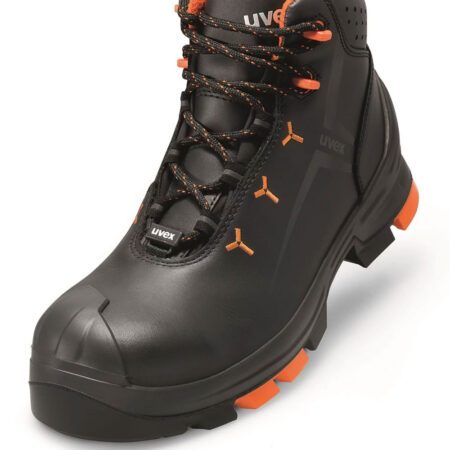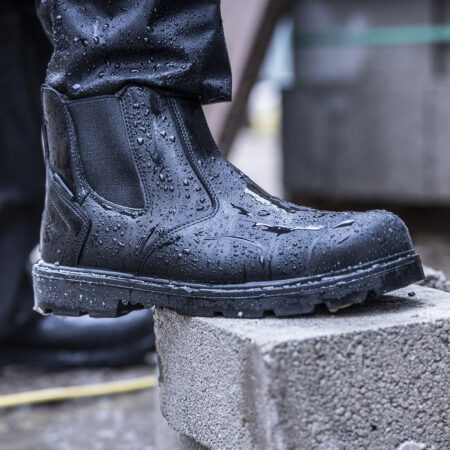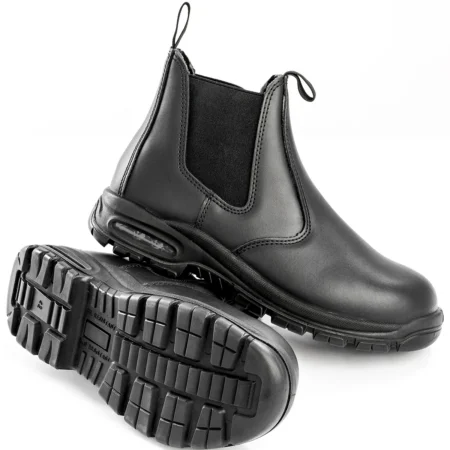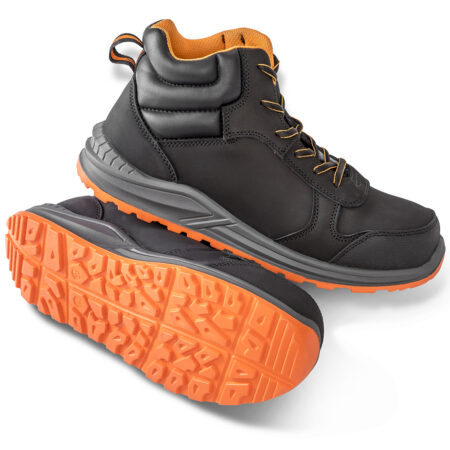
Description
S3 Safety Rating
This is one of the most common heavy-duty European safety standards for work boots under EN ISO 20345.
An S3 boot includes:
- Protective toe cap
- Anti-static protection
- Energy-absorbing heel
- Oil/fuel-resistant sole
- Penetration-resistant midsole
- Water-resistant upper
- Cleated outsole for better traction
In practical terms:
- Suitable for construction sites
- Good for outdoor work
- Better for wet or dirty environments than S1P boots
- Often required by employers for industrial safety compliance
SRC Slip Resistance
SRC is the highest standard slip-resistance rating commonly used for safety footwear.
The boot is tested on:
- Ceramic tiles with detergent
- Steel flooring with oil/glycerol
Why it matters:
- Better grip on wet warehouse floors
- Safer on oily surfaces
- Useful for loading bays, garages, factories, kitchens, and industrial areas
Compared with SRA-only boots, SRC generally offers more all-round traction.
Water-Resistant Black Leather Upper
The upper is made from full-grain smooth leather with water-resistant treatment.
Benefits:
- Handles rain and splashes
- More durable than synthetic uppers
- Resists abrasion and tearing
- Easier to clean than fabric boots
Important:
- “Water-resistant” is not the same as fully waterproof
- Fine for damp conditions and outdoor work
- Not ideal for standing in deep water for long periods
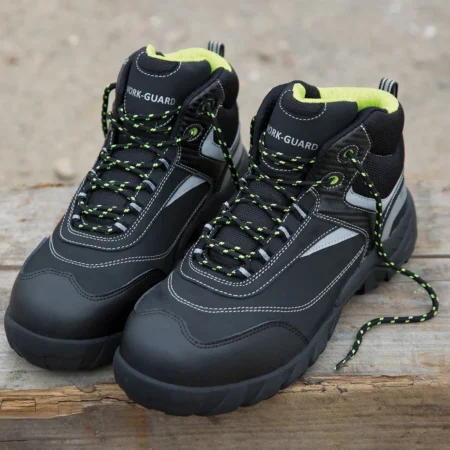
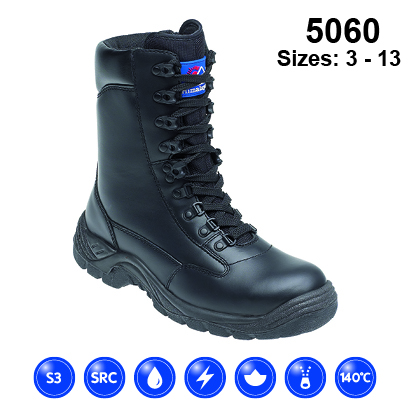
9-Eyelet Lace Tie
A tall lacing system extending high up the ankle.
Advantages:
- Strong ankle support
- More stable on uneven ground
- Better fit adjustment
- Helps reduce ankle rolling
This design is common in:
- Combat-style boots
- Security footwear
- Utility and site boots
Anti-Static
The sole allows controlled discharge of static electricity.
This helps:
- Reduce static buildup
- Lower spark risk
- Protect sensitive electronics
Useful in:
- Warehouses
- Fuel handling areas
- Manufacturing
- Electronics environments
Oil Resistant
The outsole compound resists damage from:
- Oils
- Diesel
- Fuel
- Industrial chemicals
Benefits:
- Better grip on contaminated floors
- Longer sole life
- Reduced sole cracking or softening
Especially useful in:
- Workshops
- Garages
- Factories
- Plant environments
140°C Temperature Resistant Outsole
The sole can tolerate brief contact with surfaces up to 140°C.
This protects against:
- Hot concrete
- Warm metal surfaces
- Industrial flooring
- Friction heat
Important:
- It is not a welding/foundry boot
- Meant for occasional contact heat, not constant extreme heat
Steel Toe Cap
The steel toe is tested to withstand:
- 200 joules impact
- Heavy compression forces
Protects against:
- Falling tools
- Crushed toes
- Heavy equipment accidents
Steel toe advantages:
- Strong protection
- Durable
- Often cheaper than composite alternatives
Trade-off:
- Heavier than composite toe caps
Steel Midsole
A steel anti-penetration layer inside the sole protects from sharp objects underneath.
Helps prevent punctures from:
- Nails
- Screws
- Scrap metal
- Construction debris
This is particularly important on:
- Building sites
- Demolition areas
- Industrial yards
Side Zip
The boot includes a side zip alongside the laces.
Advantages:
- Faster to put on/remove
- No need to fully relace each time
- Convenient for long shifts
Popular with:
- Security staff
- Drivers
- Warehouse workers
- Emergency services users
High-Cut Design
The boot rises higher above the ankle than standard safety boots.
Benefits:
- Better ankle stability
- More lower-leg support
- Helps when walking on uneven surfaces
- Useful for lifting and carrying work
Trade-offs:
- Heavier than trainer-style safety shoes
- Warmer in hot weather
- Requires some break-in time
Real-World Suitability
These boots are well suited for:
- Construction
- Warehousing
- Security work
- Industrial maintenance
- Outdoor trade work
- Transport and logistics
Less ideal for:
- Very hot environments
- Long-distance walking
- Lightweight athletic-style comfort
- Constant immersion in water