Description
Product Identity
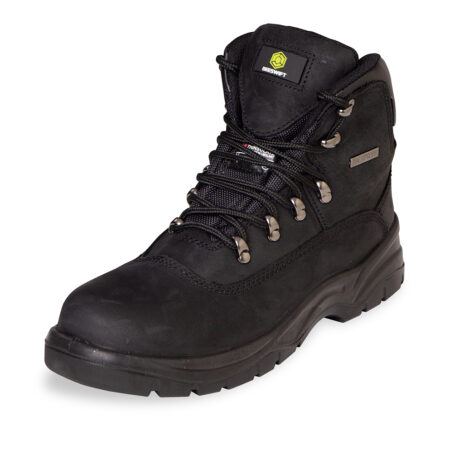
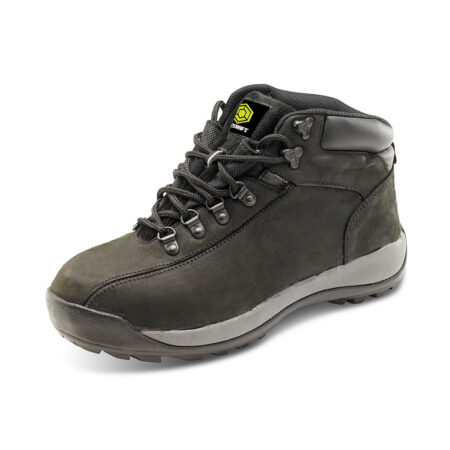
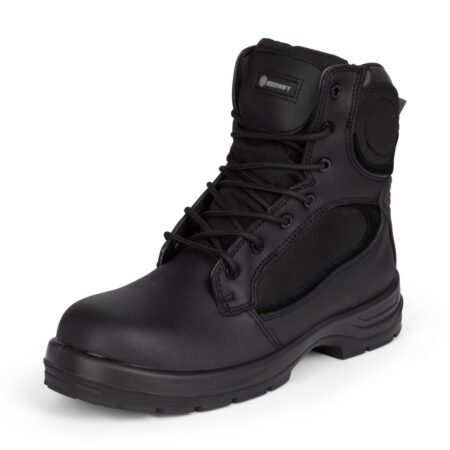
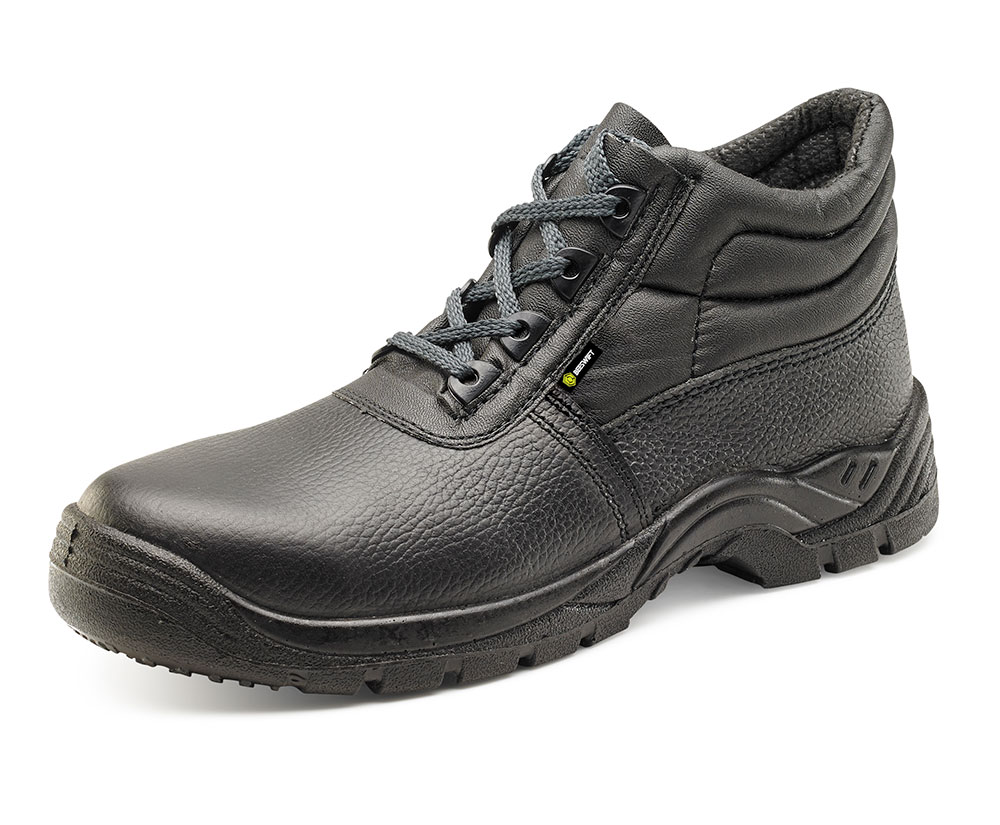
- Model: CF50BL
- Type: Non-metallic chukka safety boot
- Safety Rating: EN ISO 20345:2011 S3 SRC
- Colour: Black
- Height: Mid/ankle-height chukka boot
- Available Sizes: UK 3–13 typically available
The CF50BL is designed as a lightweight alternative to traditional steel safety boots, prioritising flexibility and comfort while still providing full S3 workplace protection.
Upper Construction
Water-Resistant Leather Upper
- Constructed from coated leather designed to resist:
- rain
- damp surfaces
- workplace splashes
- light outdoor conditions
This is not fully waterproof like a membrane-lined boot, but it performs well in normal industrial and warehouse environments.
Chukka Design
The shorter ankle profile provides:
- better freedom of movement
- easier crouching and driving
- reduced overall boot weight
- less ankle restriction than full-height site boots
This makes it especially suitable for:
- logistics
- warehouse work
- delivery driving
- factory work
- engineering environments
Toe Protection System
200 Joule Composite Toe Cap
The toe cap protects against:
- dropped tools
- pallet impacts
- machinery parts
- compression injuries
Certified to withstand:
- 200 Joules impact force
- approximately 15kN compression force
Advantages of Composite Toe Caps
Compared with steel:
- significantly lighter
- non-metallic
- does not conduct cold or heat as much
- more comfortable in winter
- airport/security scanner friendly
- reduced fatigue during long shifts
Composite toe caps still meet the same EN ISO impact standards as steel toe caps.
Midsole Protection
Composite Midsole
The penetration-resistant layer protects against:
- nails
- screws
- sharp debris
- metal offcuts
- construction waste
Composite vs Steel Midsole
Composite midsoles offer:
- lower weight
- greater flexibility
- improved walking comfort
- less rigid sole feel
- reduced cold transfer
This noticeably improves comfort on:
- concrete floors
- warehouse walking routes
- long standing shifts
Traditional steel midsoles are often stiffer and heavier.
Sole Technology
Dual Density PU Sole
The sole uses two polyurethane densities:
Softer Inner PU Layer
Provides:
- cushioning
- shock absorption
- underfoot comfort
- reduced pressure on joints
Harder Outer PU Layer
Provides:
- abrasion resistance
- grip durability
- structural support
- longer sole life
This combination balances comfort and durability.
Advantages of PU Soles
- lighter than rubber soles
- flexible
- good cushioning
- quieter underfoot
- comfortable for indoor work
Trade-off:
- not as heat resistant as rubber/HRO outsoles
Slip Resistance
SRC Slip Resistance Rating
SRC is the highest slip-resistance classification under EN ISO standards.
Tested on:
| Surface | Contaminant |
|---|---|
| Ceramic tile | Detergent solution |
| Steel surface | Glycerol/oily solution |
Practical Performance
Suitable for:
- warehouses
- factories
- garages
- workshops
- delivery depots
- mixed indoor/outdoor use
The tread pattern is designed for grip while remaining comfortable for continuous walking.
Shock Absorption
Energy Absorbing Heel
The heel unit is designed to reduce impact forces during walking.
Benefits include:
- reduced heel fatigue
- lower knee strain
- improved lower back comfort
- better comfort on hard flooring
Particularly beneficial for:
- warehouse pickers
- drivers
- maintenance staff
- workers standing for long periods
Anti-Static Protection
Anti-Static Sole Properties
Helps dissipate static electrical build-up.
This reduces risk of:
- electrostatic discharge
- static shocks
- spark generation
Useful in:
- industrial facilities
- warehouses
- electronics handling areas
It is anti-static, not electrically insulating.
Oil Resistance
Oil Resistant Outsole
The sole compound resists degradation from:
- oils
- fuels
- lubricants
- workshop chemicals
This extends outsole durability in:
- garages
- factories
- engineering workshops
- mechanical environments